

Aquascape Lake Phosphate Binder Packs - 192 Packs / 4 Lb
AQ-40024
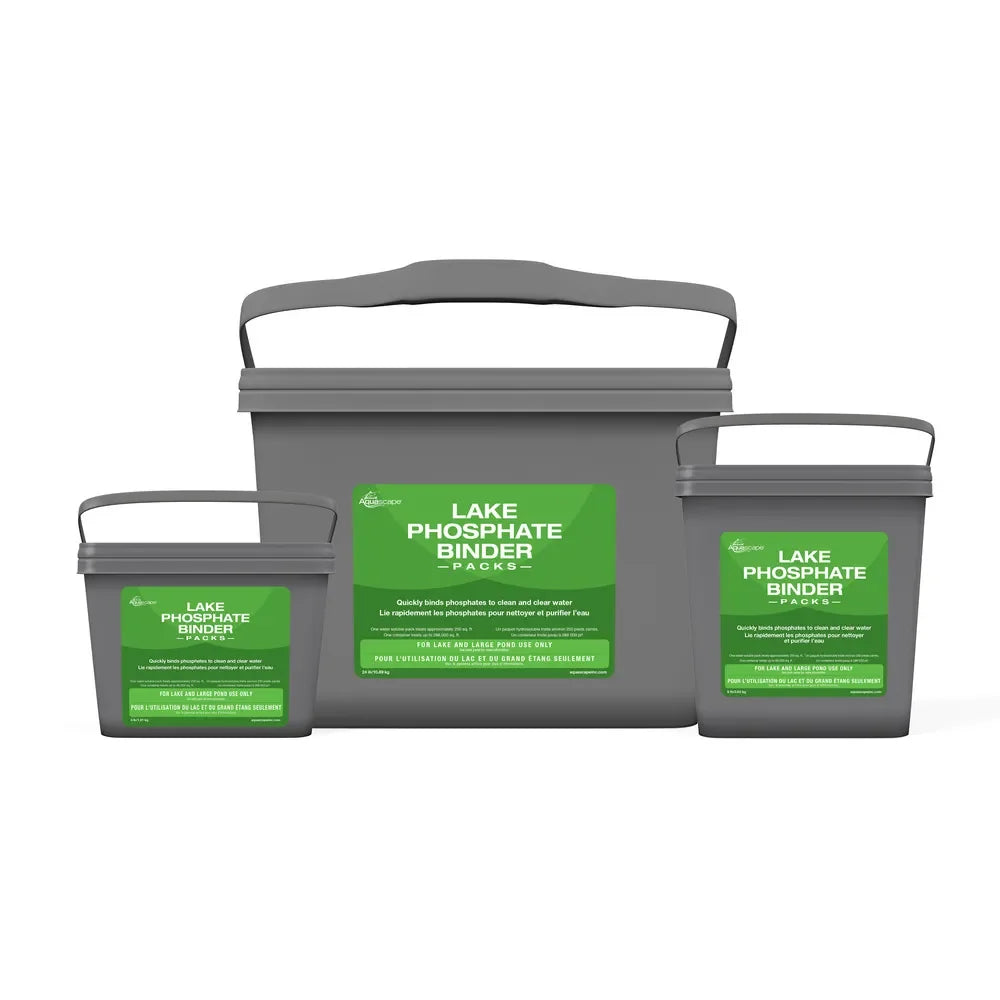
Lake Phosphate Binder Packs, 4 lb (192 Packs)
Aquascape Lake Phosphate Binder Packs 4 lb (192 packs / 1.8 kg) bind dissolved phosphate in lake water, reducing the nutrient load that drives algae blooms and aquatic weed growth. Each water-soluble pack drops directly into the water body, releasing a phosphate-binding agent that precipitates phosphate to the lake bottom where it is locked out of the biological cycle.
Reduce the Nutrient Source That Feeds Algae
Phosphate enters water bodies from runoff, decaying vegetation, and fish waste. Algae consume phosphate and use it to fuel rapid growth. Binding available phosphate removes the fuel before algae can use it, reducing bloom intensity and duration more durably than algaecide treatments alone, which kill existing algae without addressing the ongoing nutrient supply. The 4 lb pack size provides one full treatment cycle for a smaller lake or pond.
| Spec | Value |
|---|---|
| Pack Size | 4 lb (1.8 kg) / 192 packs |
| Application | Water-soluble packs, drop directly into water |
| Safe For | Fish, aquatic wildlife, beneficial aquatic plants |
| Treatment Frequency | As needed based on phosphate levels and algae activity |
How to Use
Test water phosphate levels before treatment to determine application quantity. Drop the required number of packs into the water body per label instructions. Distribute across the lake surface for best results. Repeat as phosphate levels indicate. Use as part of a broader lake management program alongside aeration and beneficial bacteria treatments for best long-term results.
Ideal for smaller lakes, large private ponds, and commercial water features experiencing recurring algae blooms driven by high phosphate inputs from surrounding watershed, lawn runoff, or waterfowl activity.